menu
menu
close
client
size
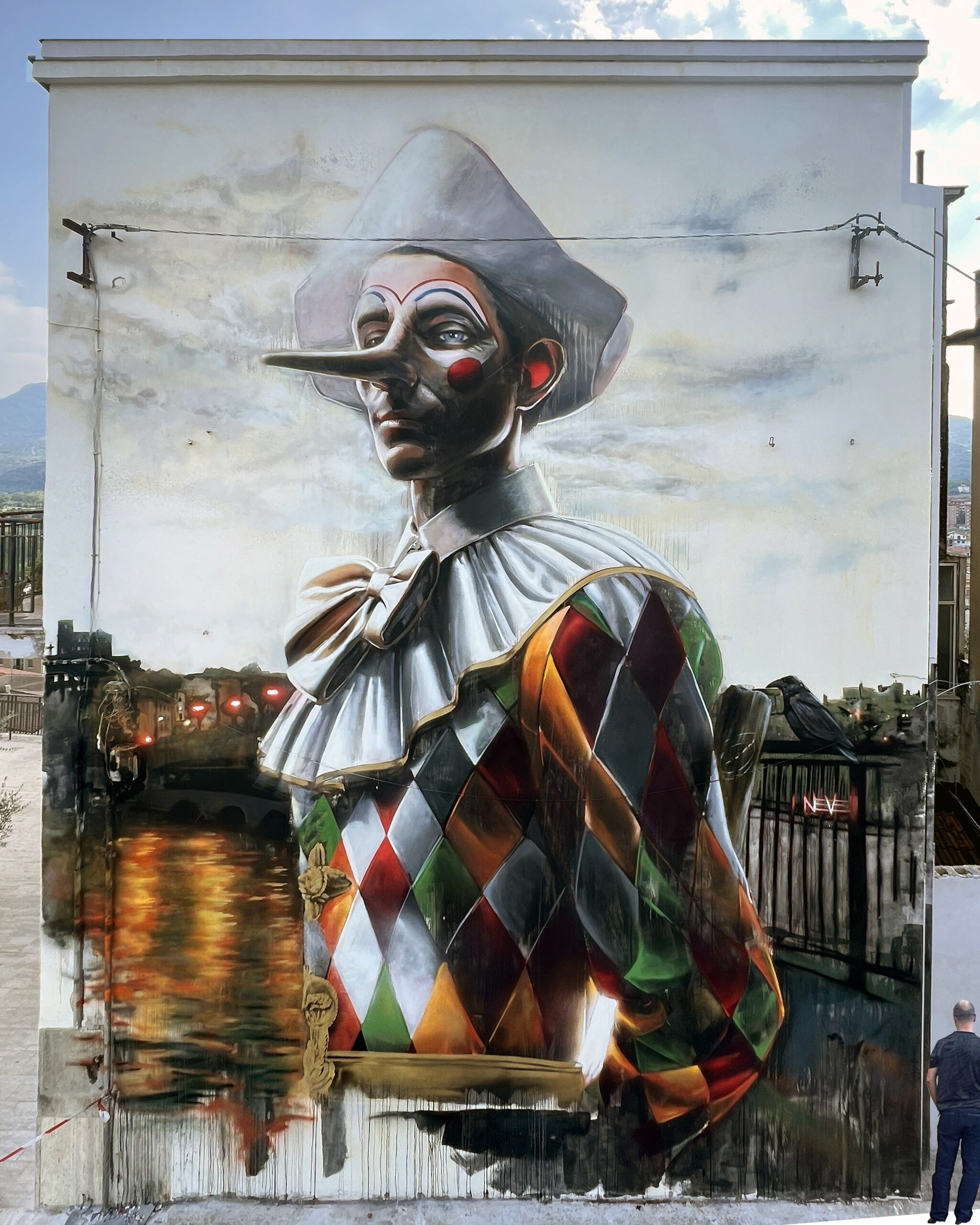
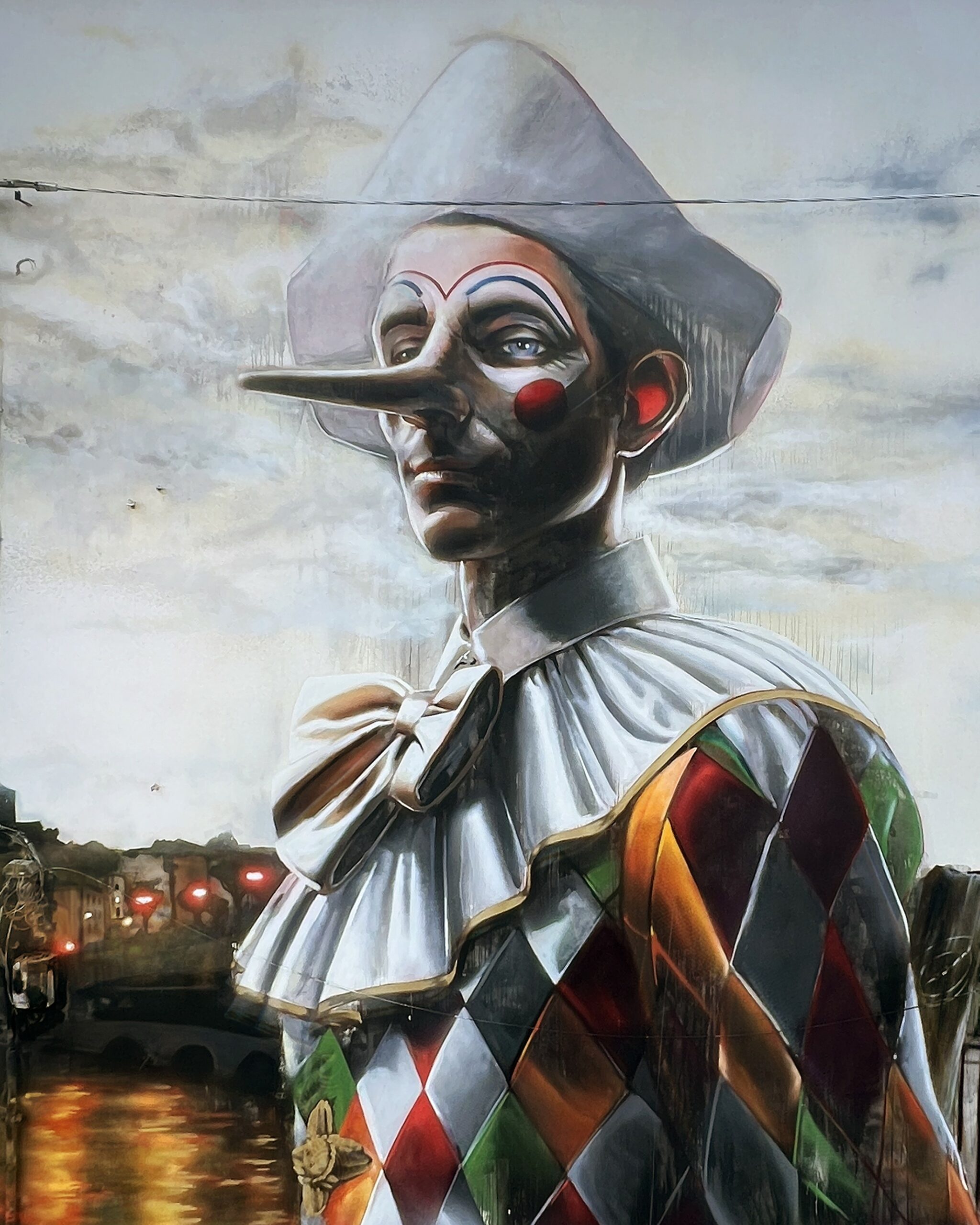
One blue eye is visible, looking slightly to the side: watchful, knowing, slightly amused
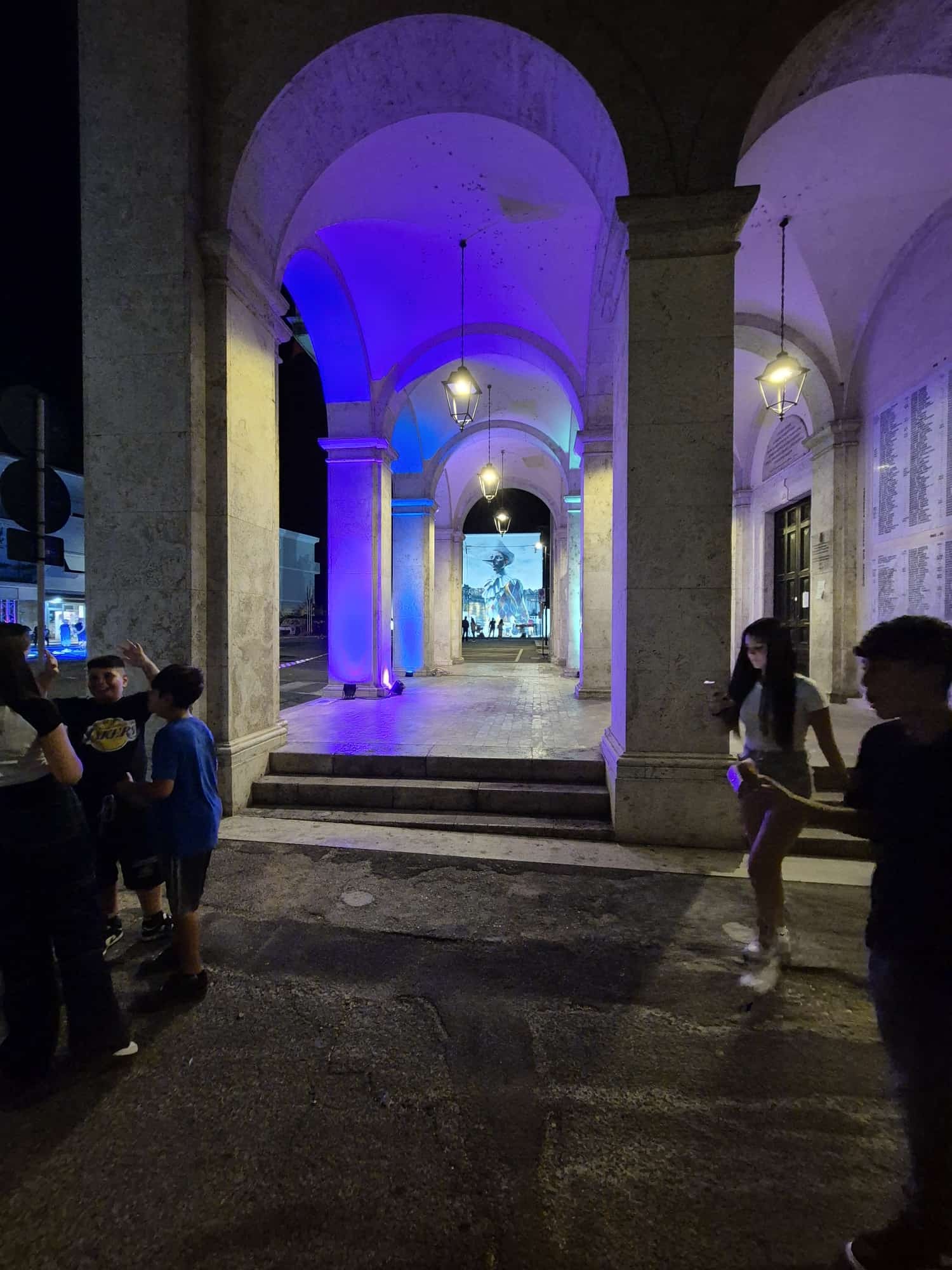
"Il Burlicchio" is a large-scale exterior mural on the facade of a building in Piazza IV Novembre, Pontecorvo — a town in the province of Frosinone, Ciociaria, southern Lazio. The work depicts the traditional carnival mask of Pontecorvo: a figure that, according to the artist, had never before been formally represented in painted form. The mask — called Il Burlicchio — is a synthesis figure, a composite of the great archetypes of the Italian and European carnival tradition. In Neve's own description: part Arlecchino, part Pinocchio, part Mazzamavré (a traditional Ciociaria carnival spirit), part all of them at once. The figure that emerges from this fusion is neither purely local nor purely universal: it is a character who carries all of carnival's inheritance — the trickster, the clown, the innocent deceiver, the mask that conceals and reveals simultaneously. The figure is monumental, filling the full height of the building. He wears the diamond-patterned Harlequin costume — lozenges in deep red, green, burgundy, cream, orange, and black, trimmed in gold — beneath a large white ruffled Pierrot collar with bow. His hat is a wide-brimmed grey bicorne. His skin is dark grey, theatrically shadowed. His nose is long — Pinocchio's nose, the nose of the liar who knows he is lying, the nose of the innocent, the mask's most immediate signifier. His cheeks bear red carnival circles. One blue eye is visible, looking slightly to the side: watchful, knowing, slightly amused. The background is not a neutral wall but a painted panorama: the Liri river as it passes through Pontecorvo, with warm amber reflections on the water, arched bridges, the glow of street lamps, the profile of the town behind him in a cloudy dusk sky. A black crow perches on a painted iron railing at the right edge of the composition. This is Pontecorvo today and in the postwar years — the town as it has looked and still looks, held in the light of a remembered late afternoon. The mask is described by the artist as an image of collective exorcism: a figure through which a community elaborates its traumas by making them visible, giving them a face, and then laughing at them. The carnival mask as psychological function — not entertainment only, but a rite of transformation. The work was inaugurated in August 2024 and has become a significant landmark in the urban fabric of Piazza IV Novembre.