menu
menu
close
client
La Valle dei Libri
size
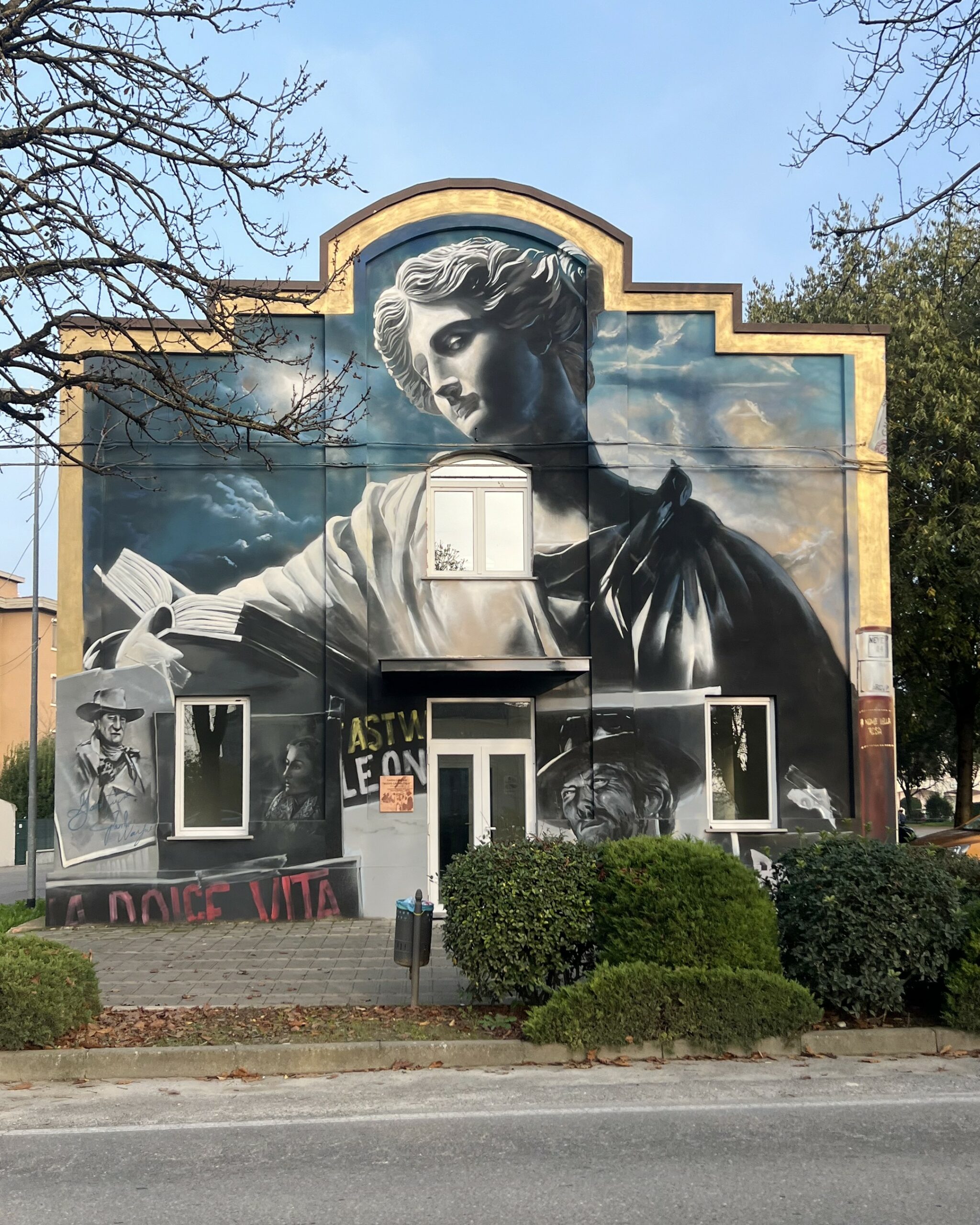
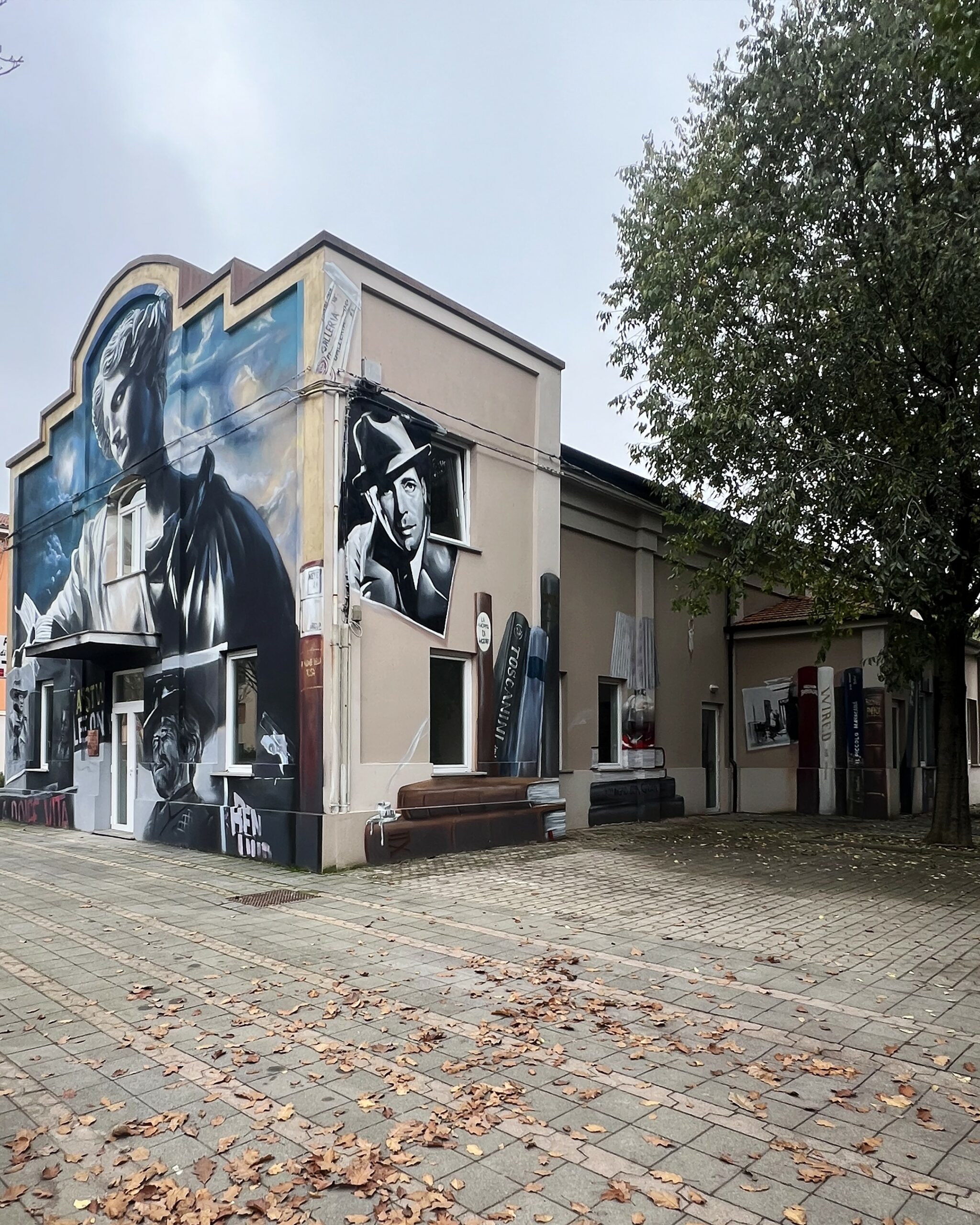
L'Allegoria della Cultura is a mural commissioned by La Valle dei Libri and created by artist Neve in autumn 2024 in Gragnano Trebbiense, Piacenza.
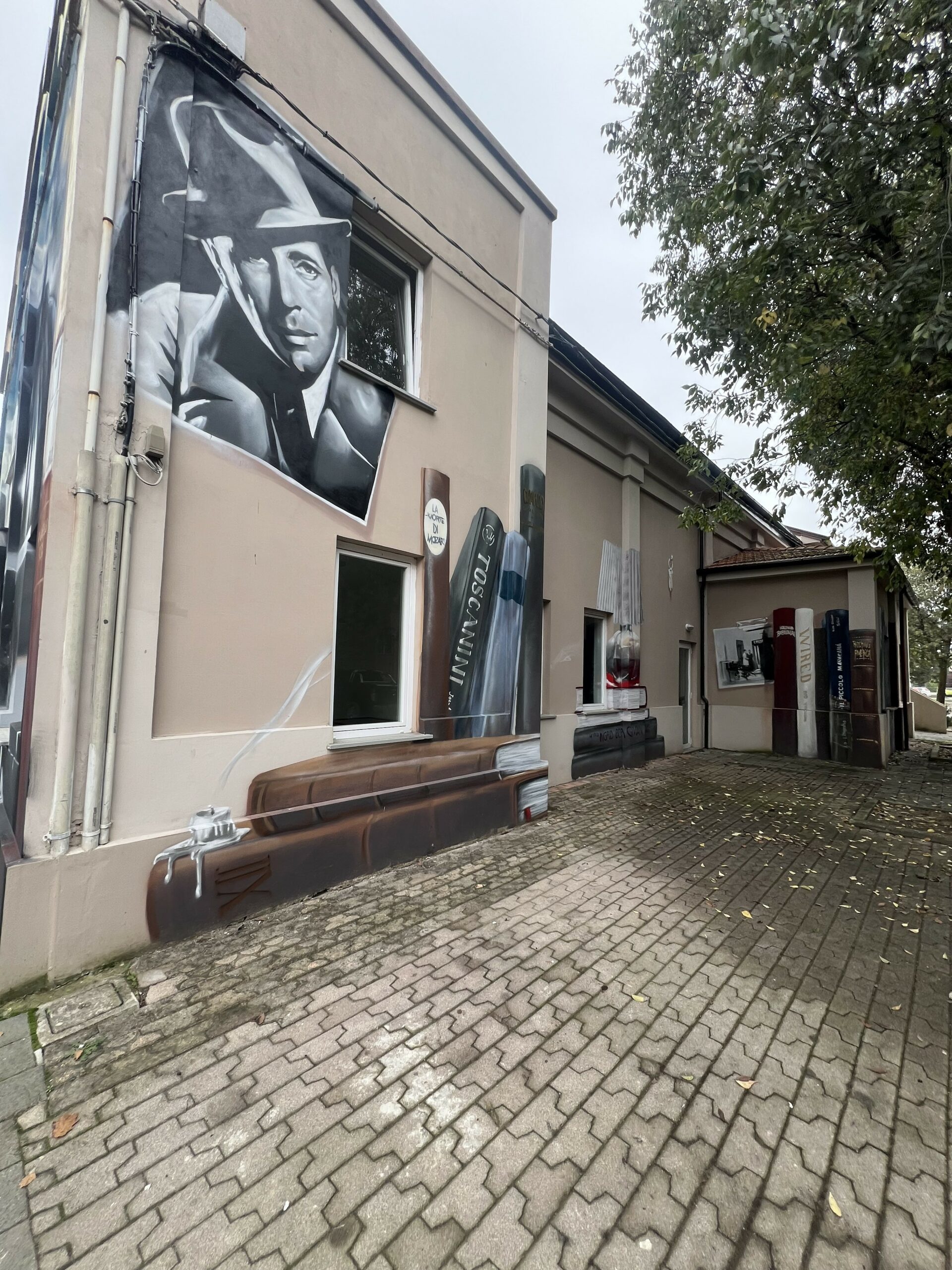
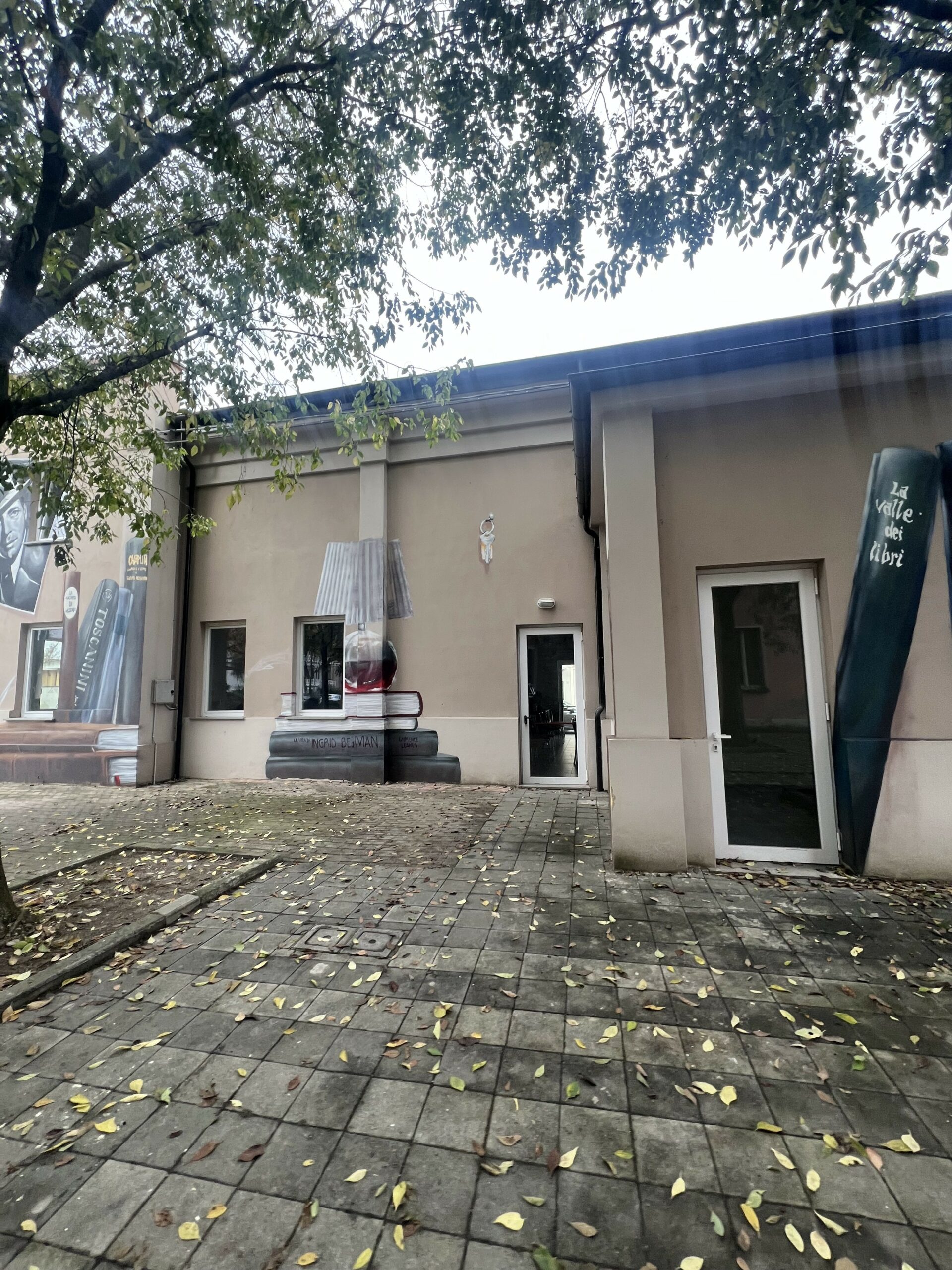
"L'Allegoria della Cultura" is a large-scale exterior mural covering the facade and side walls of the ex Cinema Italia in Gragnano Trebbiense, a small town in the Province of Piacenza in Emilia-Romagna. The work was painted in 2024 for "La Valle dei Libri" — a project initiated by journalists Giangiacomo Schiavi and Lanfranco Vaccari to create a network of fifteen thematic bookshops distributed across the villages of the Val Trebbia and Val Luretta, each dedicated to a different literary or cultural genre, each hosted in a historic or repurposed building. The specific bookshop the mural accompanies is "Primafila" — dedicated to cinema, theatre, music, and old vinyl records — located near the ex Cinema Italia, opening May 27, 2025. The mural is the visual identity of the building's cultural rebirth: a former cinema now becoming a bookshop of cinema, dressed in its new function. The compositional logic of "L'Allegoria della Cultura" is trompe l'oeil: the entire building — its facade, its architectural mouldings, its windows — is treated as if it were the interior of a gallery or a library, the walls hung with framed paintings. Each "frame" contains a cultural reference: figures and scenes from the world of Italian and international cinema, music, and culture, rendered in hyperrealist black-and-white. The building's ornamental yellow-gold arch at the roofline becomes part of the trompe l'oeil composition — transformed into the gilded frame of the largest painting of all, the one that is the building itself. The central allegorical figure that occupies the upper half of the main facade is female and classical — a Neoclassical or Hellenistic sculpture come to life, rendered in hyperrealist white-grey as if carved in marble, robed and draped, with dark hair. In one hand she holds an open book; over the other shoulder, a dark bag. She looks slightly to the side with the composed attention of a goddess who has read everything and carries everything. Her head is framed by the building's original yellow-gold ornamental arch — a theatre proscenium become a painted halo, the architecture itself incorporated into the allegory. Around and below her: the gallery of culture that she presides over. Framed like paintings on a wall, a series of iconic figures from Italian and international cinema occupy the lower registers of the facade. On the left: a man in a cowboy hat — Sergio Leone, the Piacenza-born director of the Spaghetti Western ("C'era una volta il West," "Il buono, il brutto, il cattivo"), whose name is visible in partial text beside the frame. On the right, another framed portrait of a weathered, intense face — another icon of the Italian screen. On the side wall, a large figure in fedora and suit with a cigarette: the international image of noir cinema, a Bogart-like presence that places Italian culture within the wider world of cinematic history. At the base: "LA DOLCE VITA" in red letters — Fellini's 1960 masterpiece, the defining film of Italian cinema's golden age, the work that made the world look at Italy and see style, melancholy, and beauty simultaneously. The building's real windows and entrance doors are incorporated into the trompe l'oeil as "windows within the painting" — frames that look into and out of the invented world simultaneously. The artist's concept, as he described it: the allegory treats the world as a library — the inside turned outside, the building opened up to reveal that what it contained was always this: the accumulated figures and works and gestures of culture, hanging in their frames, waiting to be read. La Valle dei Libri is itself an act of cultural rescue — collecting books from private libraries destined for the pulping mill, redistributing them through a network of village bookshops, restoring life to places left behind by mass tourism and declining population. The first donation came from the family of Carlo De Benedetti: 3,000 volumes. By early 2025 the project counted 70,000.