menu
menu
close
client
Museo Del Carnevale - Champlas du Col
size
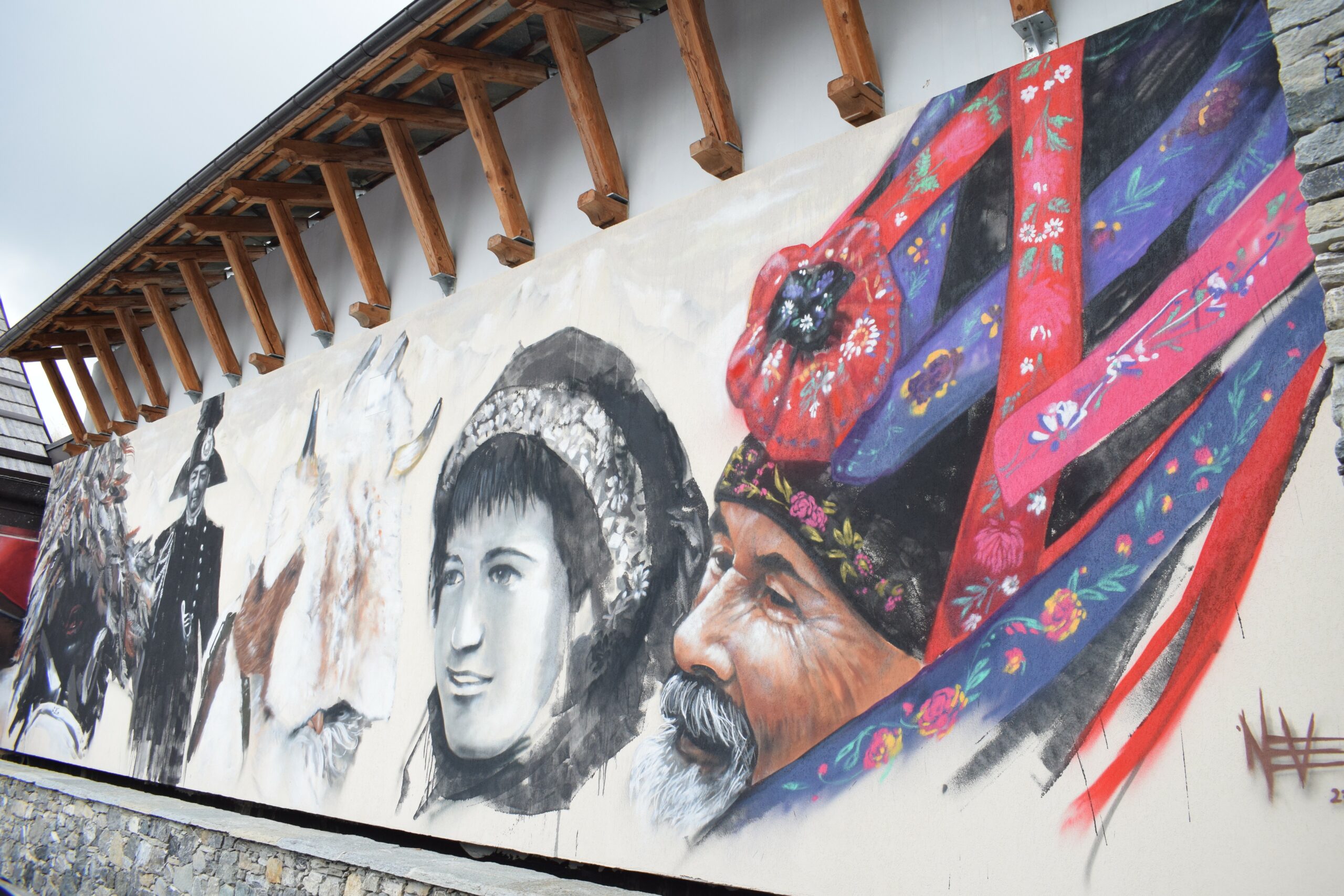
an animal mask worn by a figure whose identity the costume dissolves
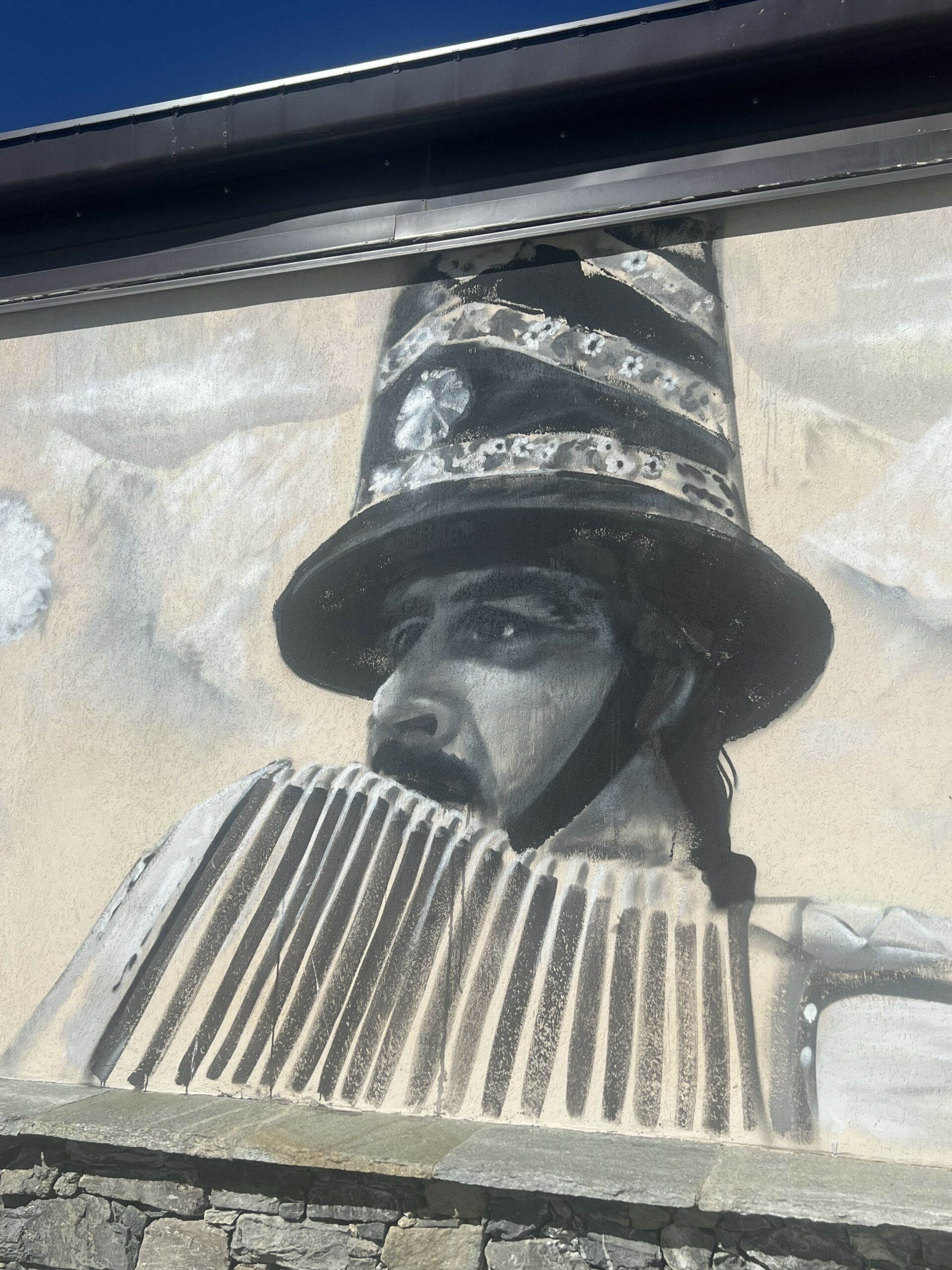
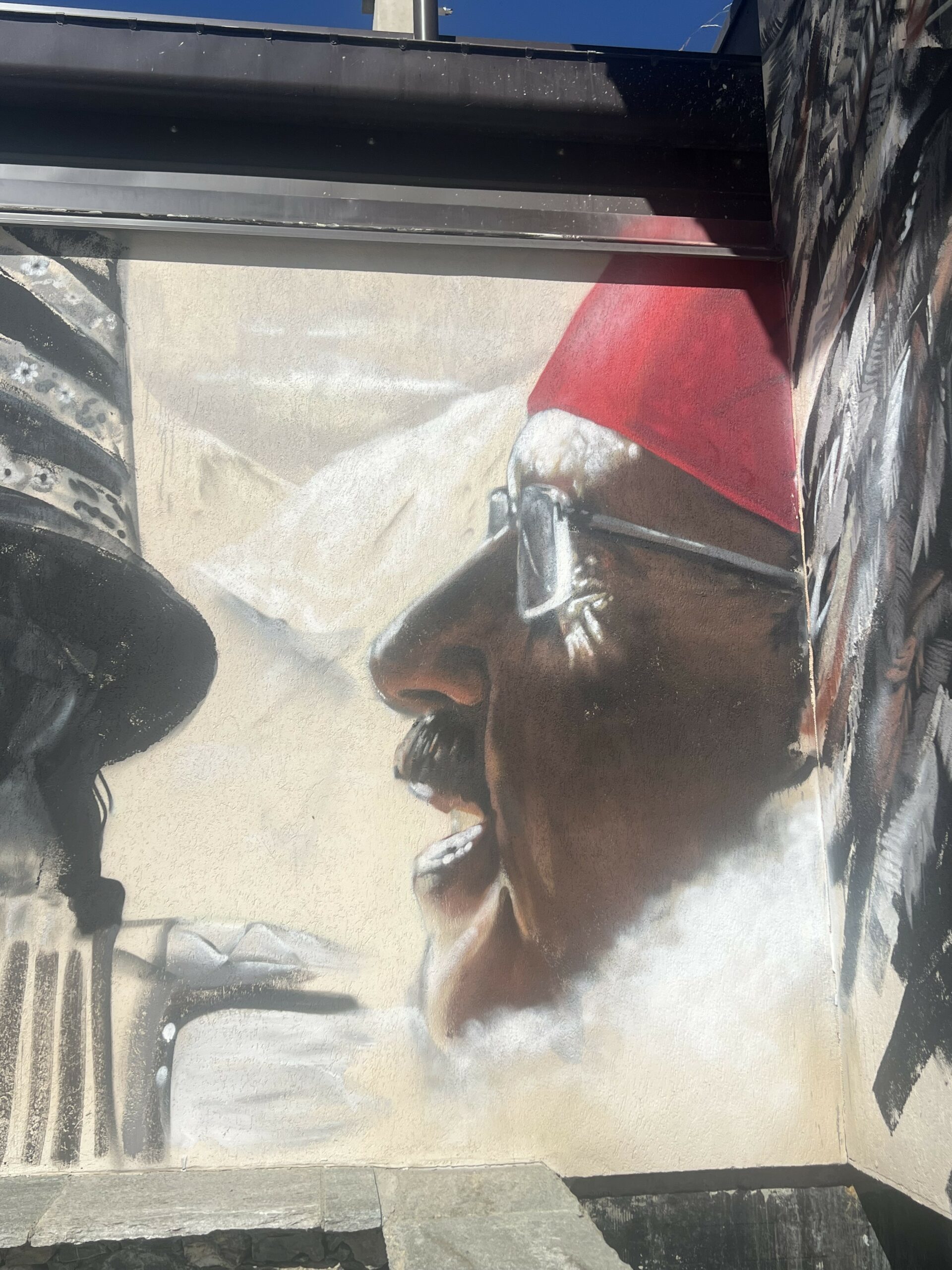
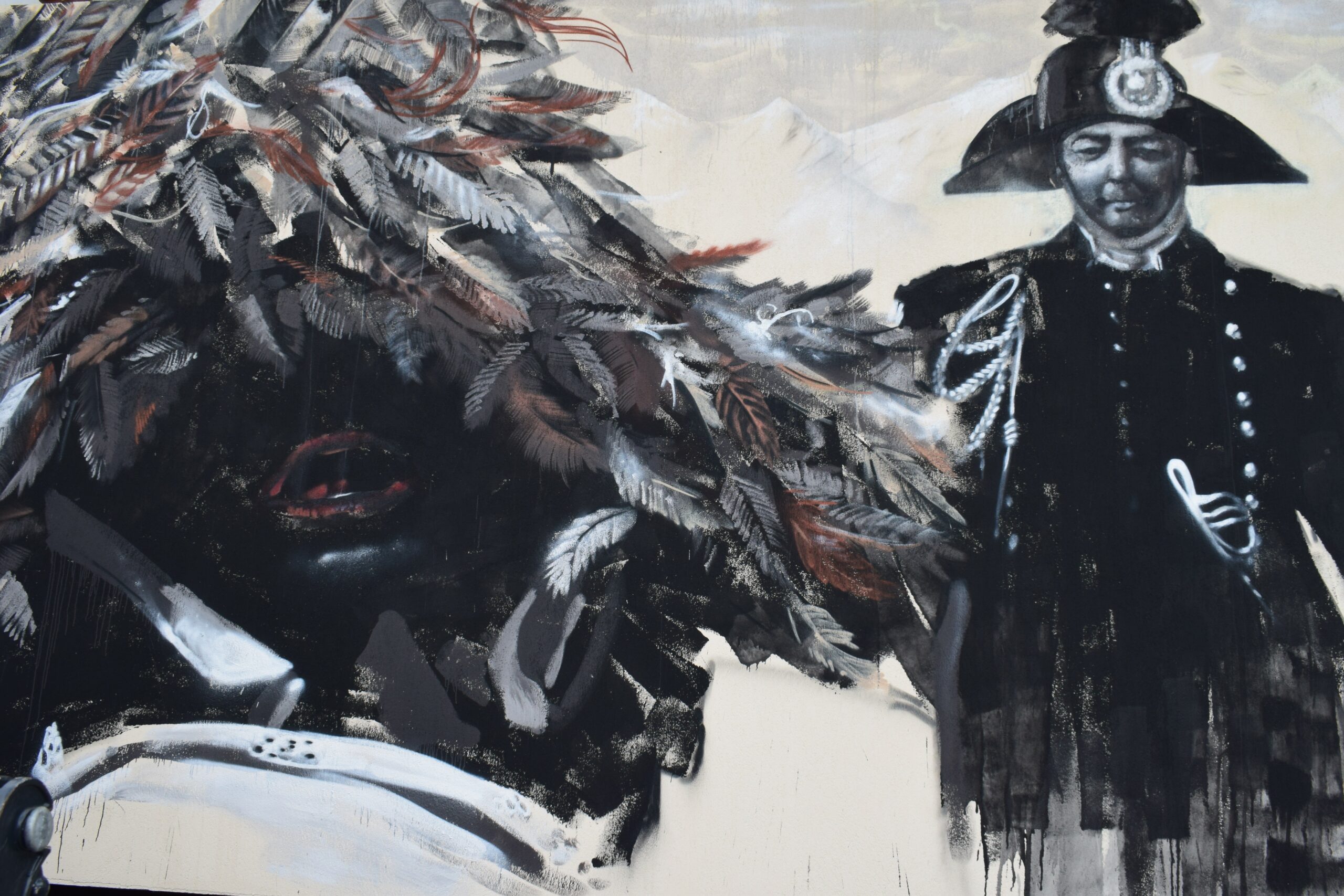
A large-scale exterior mural commissioned for Champlas du Col — a small mountain hamlet near Sestriere, in the Turin province of the Western Alps — depicting the figures of the Carnevale di Montagna: an ancient Alpine carnival tradition of pre-Christian roots, celebrated each year in the snow of the high mountains. The wall carries a procession of characters from the Champlas du Col carnival, rendered across the full width of an Alpine building whose traditional wooden eaves overhang the composition. The figures are drawn from the carnival's specific iconography and from real participants — faces and costumes documented and transposed into painted form. : A figure covered from head to foot in feathers — dense, dark, brown and grey and black, with a masked face — one of the most ancient of Alpine carnival presences, the figure who carries the wild and the animal into the village space, whose form recalls the deep forest and the pre-Christian world the carnival encodes. Beside it, an official figure in a dark military-style uniform with a bicorne hat bearing a cockade — the authority against which carnival plays, or the authority that holds carnival's order. Between them, an animal mask — white and brown fur, the head of a goat or bull — worn by a figure whose identity the costume dissolves. Further along: an accordionist in a tall decorated hat, rendered in monochromatic black and white, the bellows of the instrument compressed mid-breath; beside him, a man singing or declaiming, a red fez on his head, in partial colour. A young woman's face — calm, unmasked, looking forward — possibly la Quaresima, the figure of Lent who appears at carnival as the season's eventual counterpart: the fast that follows the feast. At the far right, and in the most vivid colour of the entire mural: an elderly man in profile, wearing an extraordinary traditional headdress — a tall, wide construction of red and purple ribbons, blue bands, embroidered white flowers, a large red pompom at the apex. The headdress erupts in colour against the warm stone of the Alpine wall. This figure is the formal culmination of the procession: the ancient costume of the mountain carnival made spectacular, made permanent. The palette moves from monochromatic (grey, black, white) on the left toward full saturated colour on the right — a formal choice that mirrors the movement of the carnival itself: from the anonymous and the masked toward the ceremonial and the revealed.