menu
menu
close
client
Michelin
size
24m h
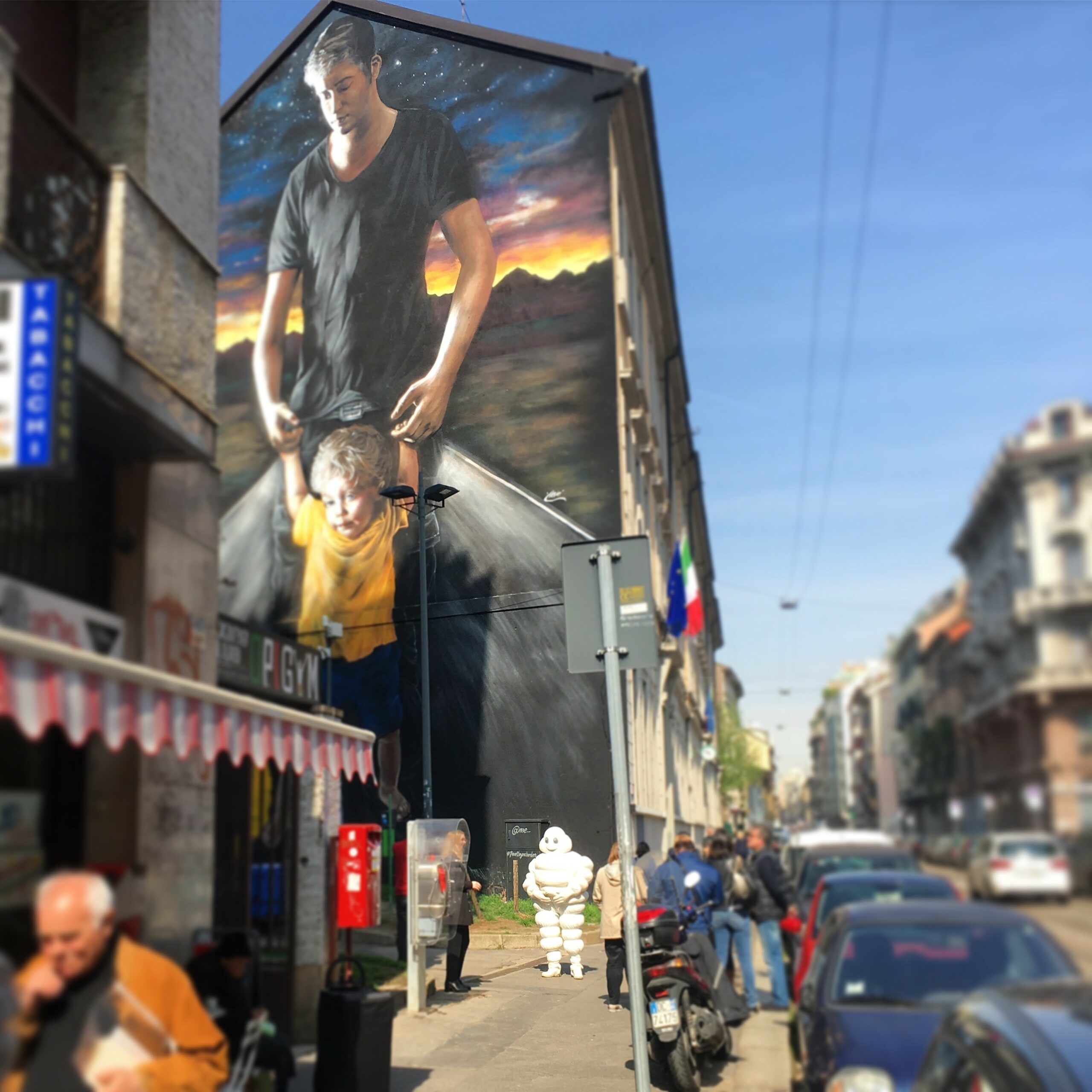
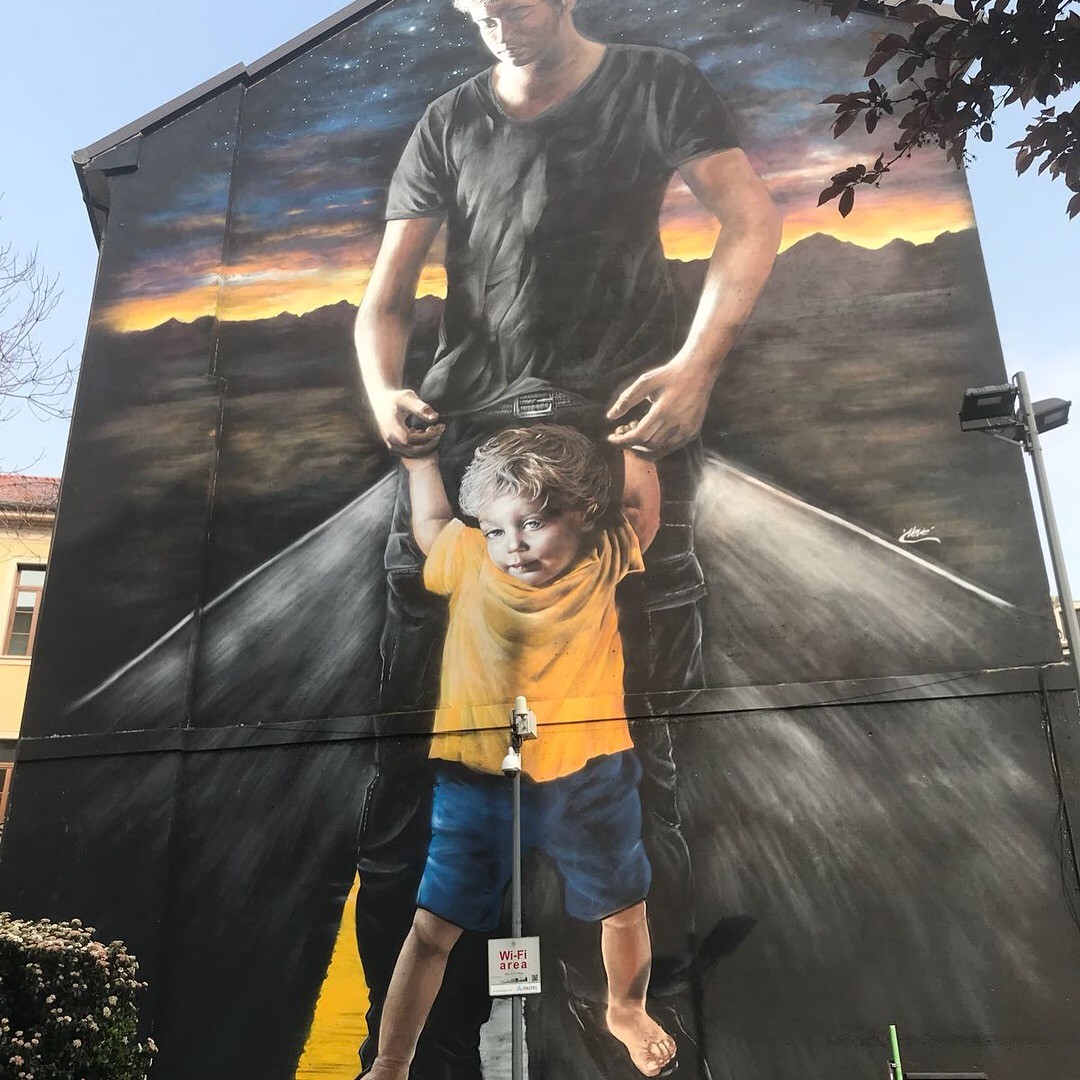
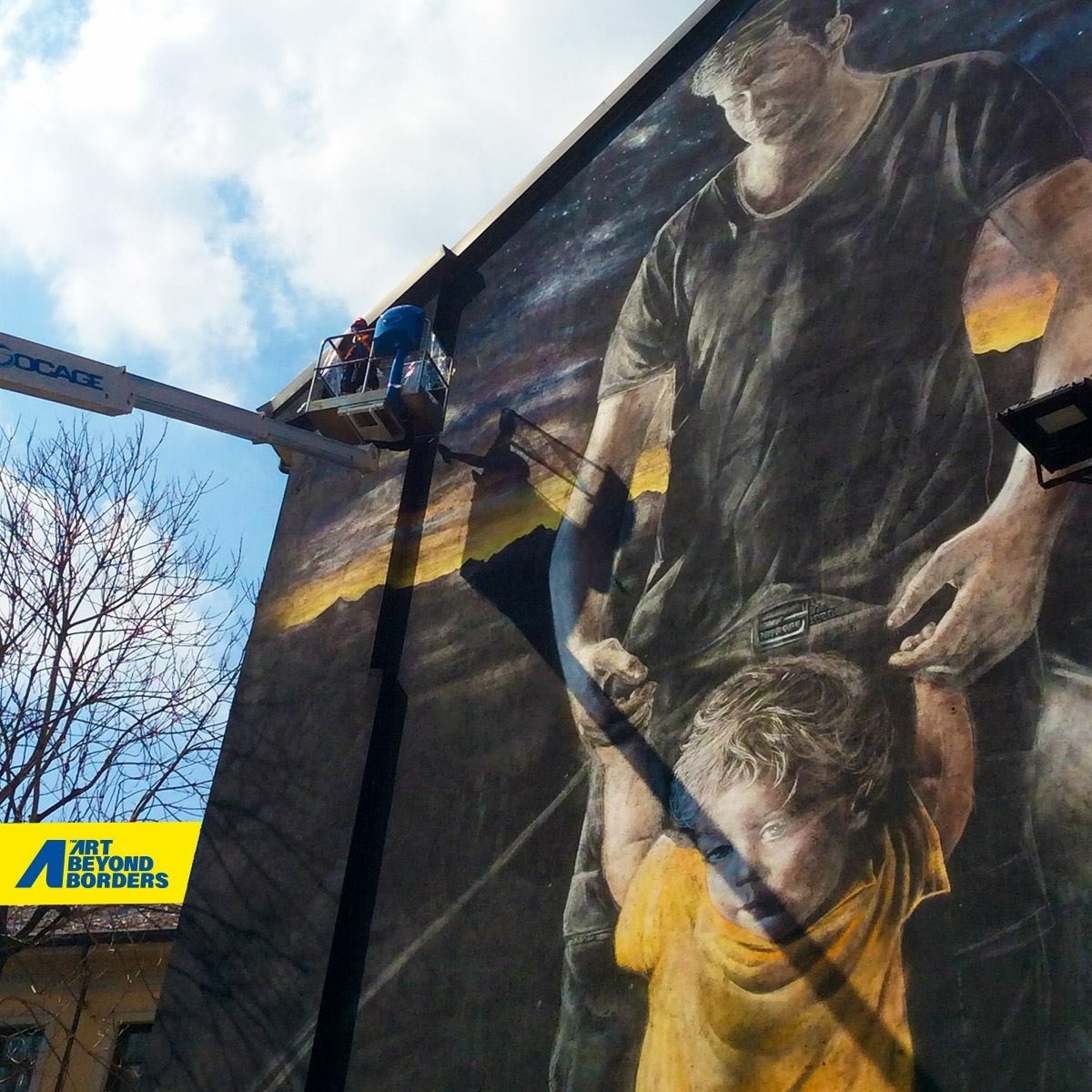
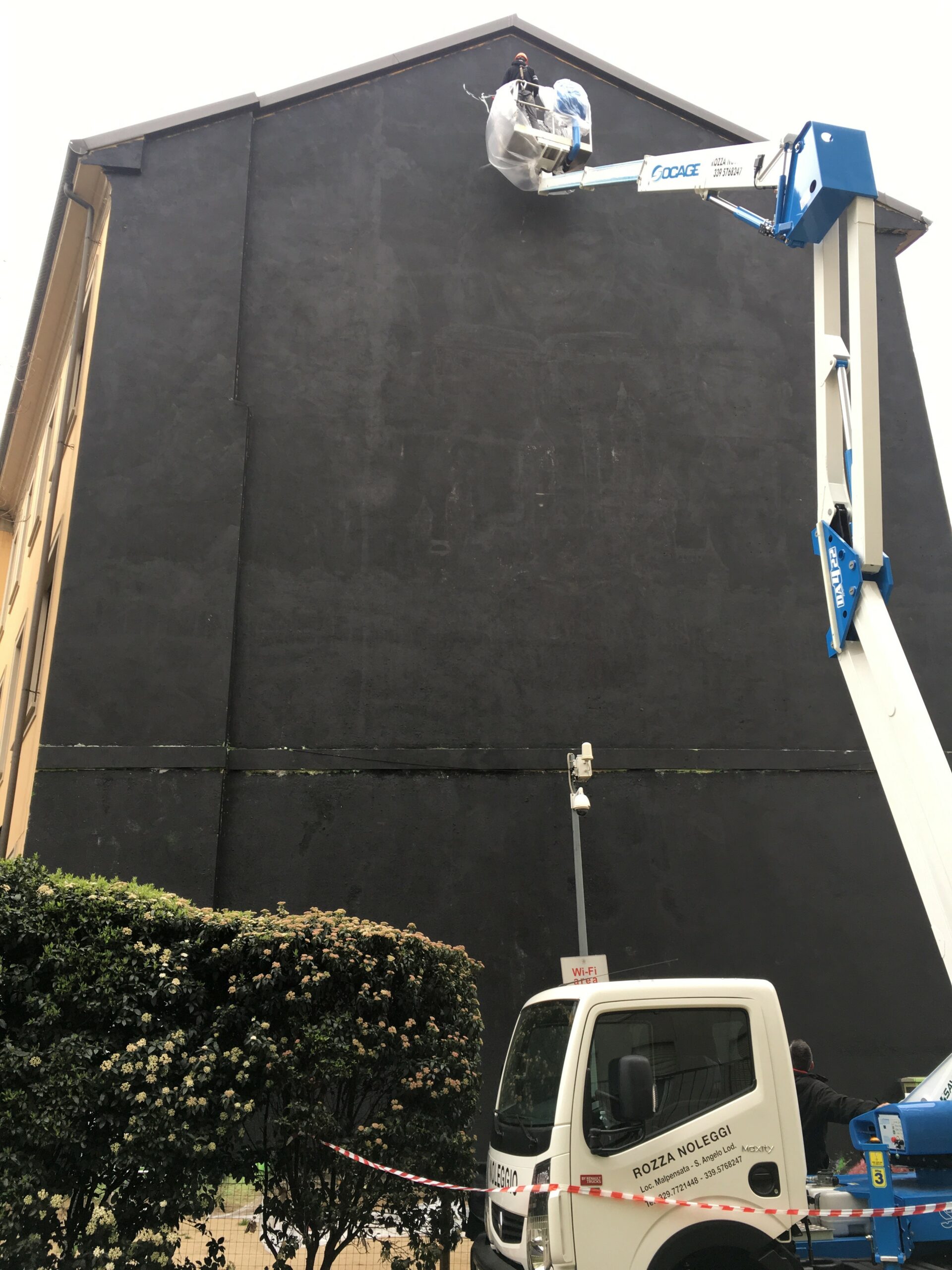
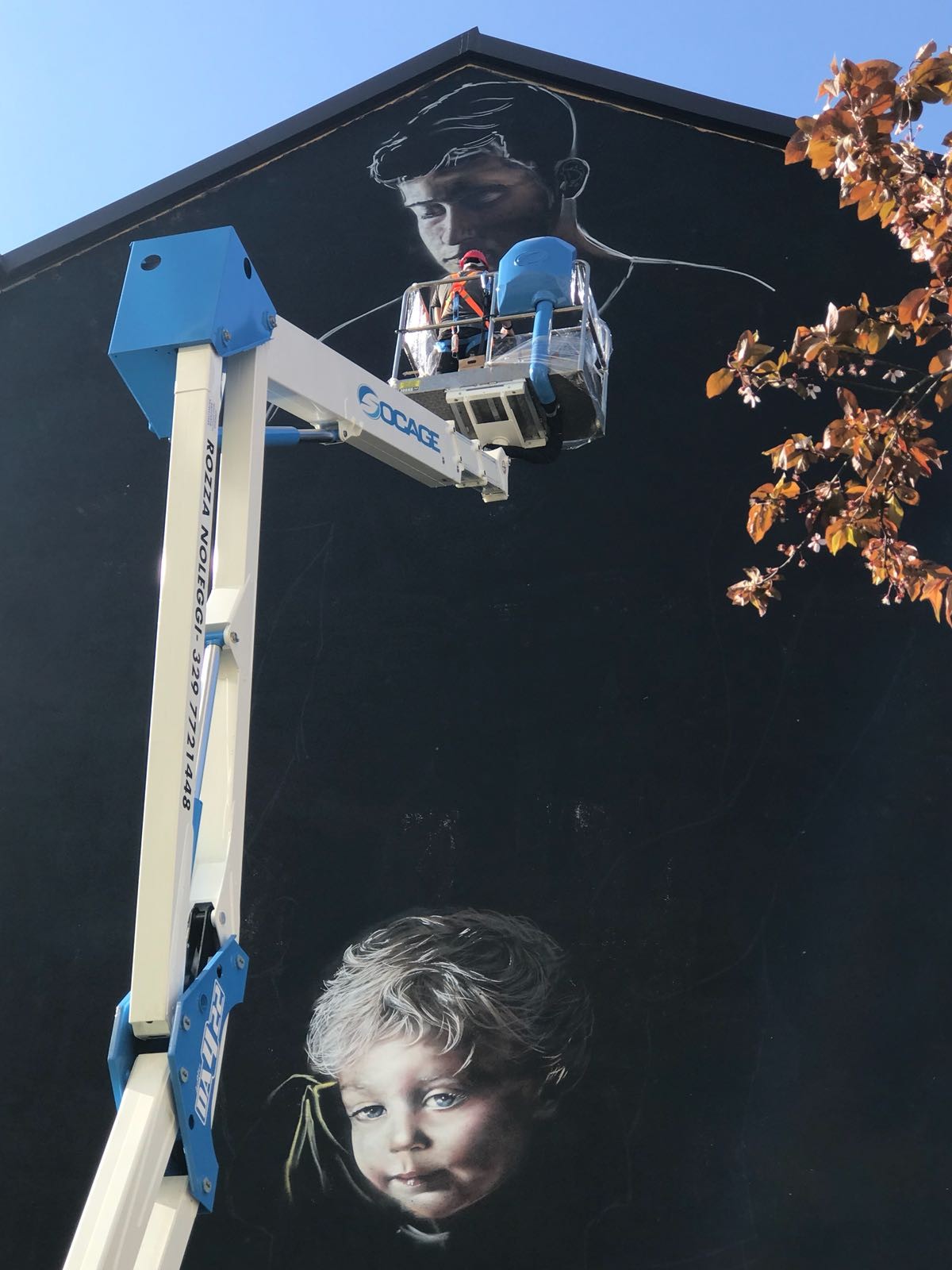
"L'Uomo in Movimento" — as the press named it — is a 24-meter mural painted on a building facade at Porta Romana, Milan, commissioned by Michelin.
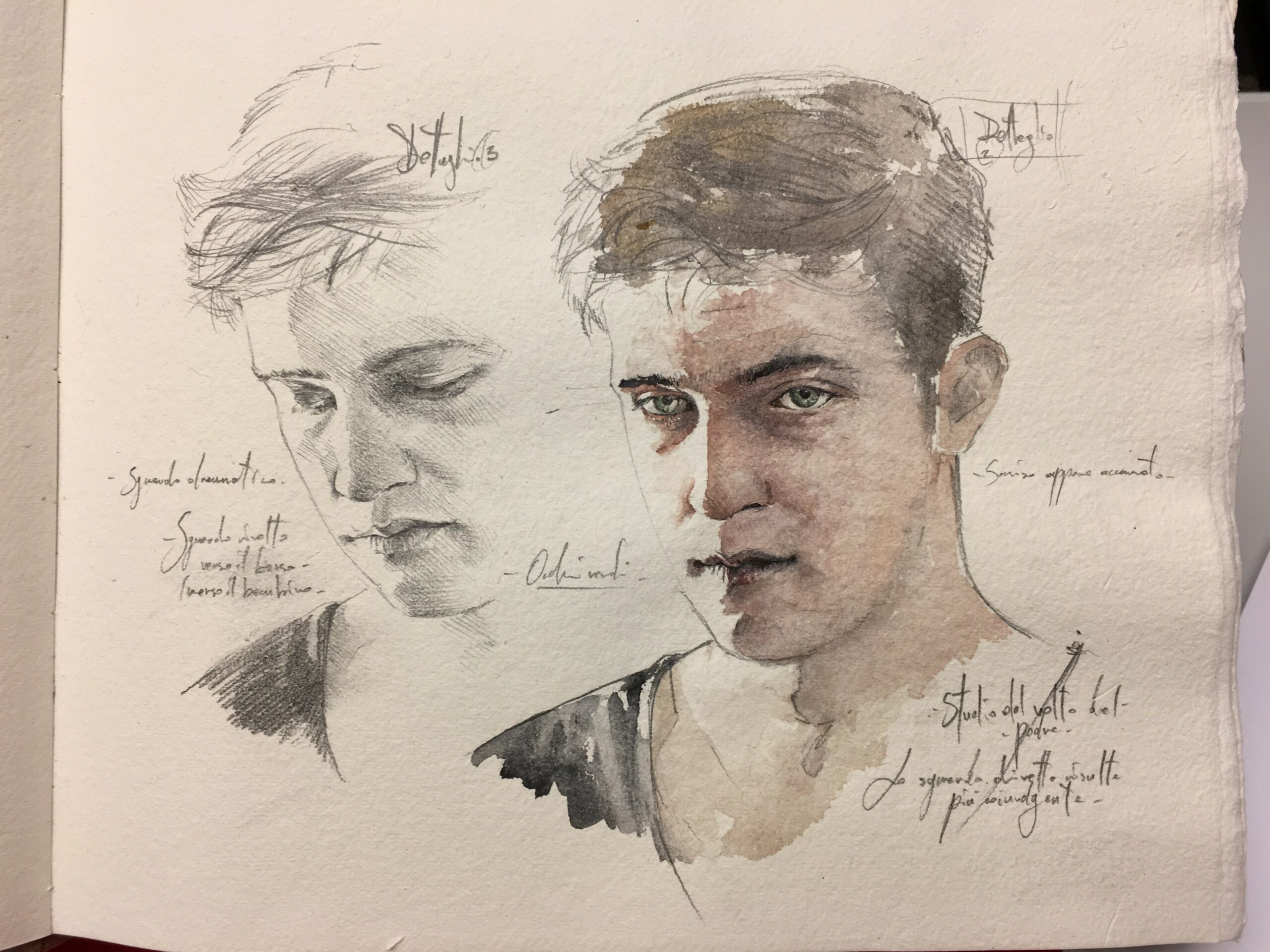
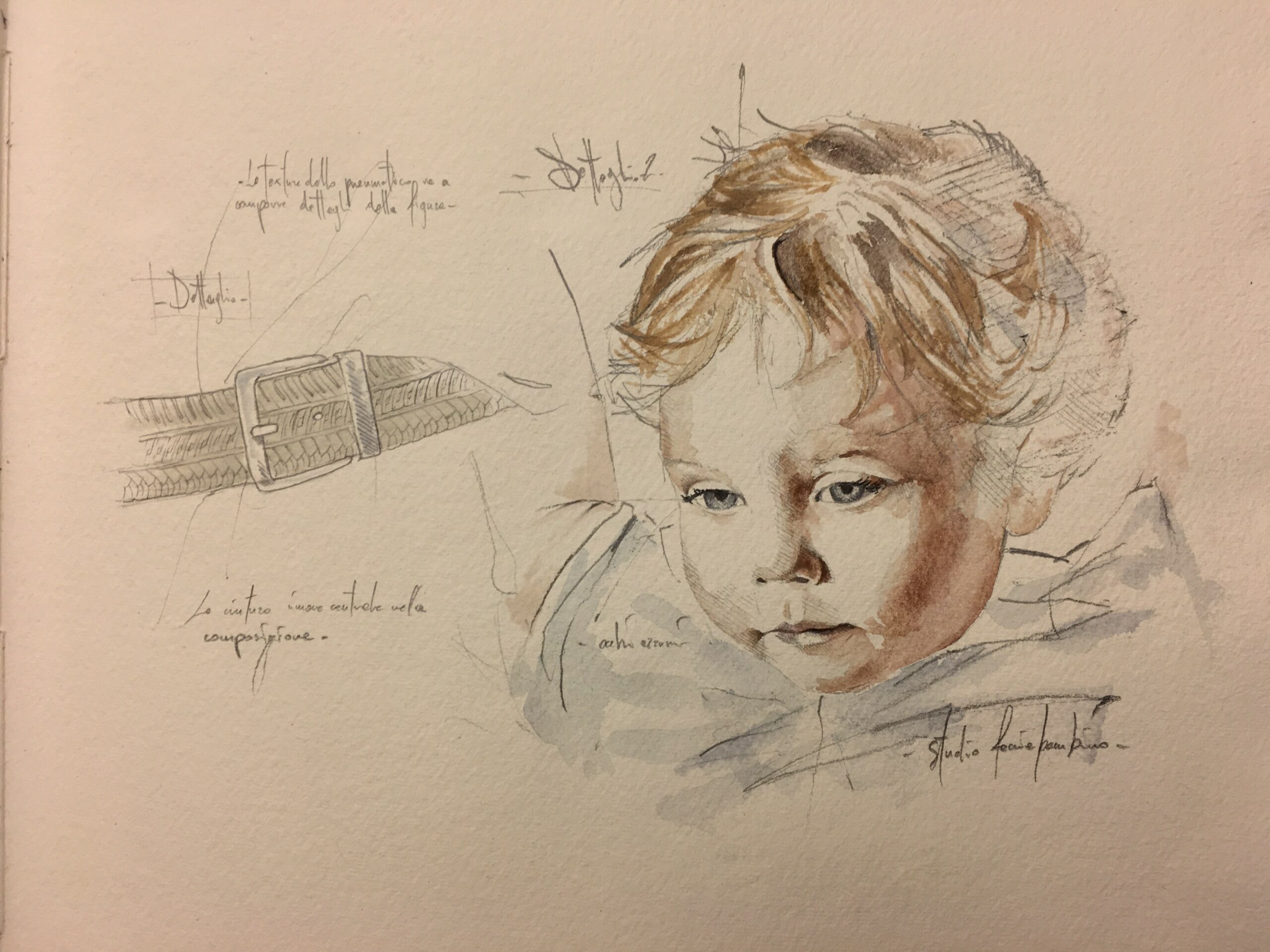
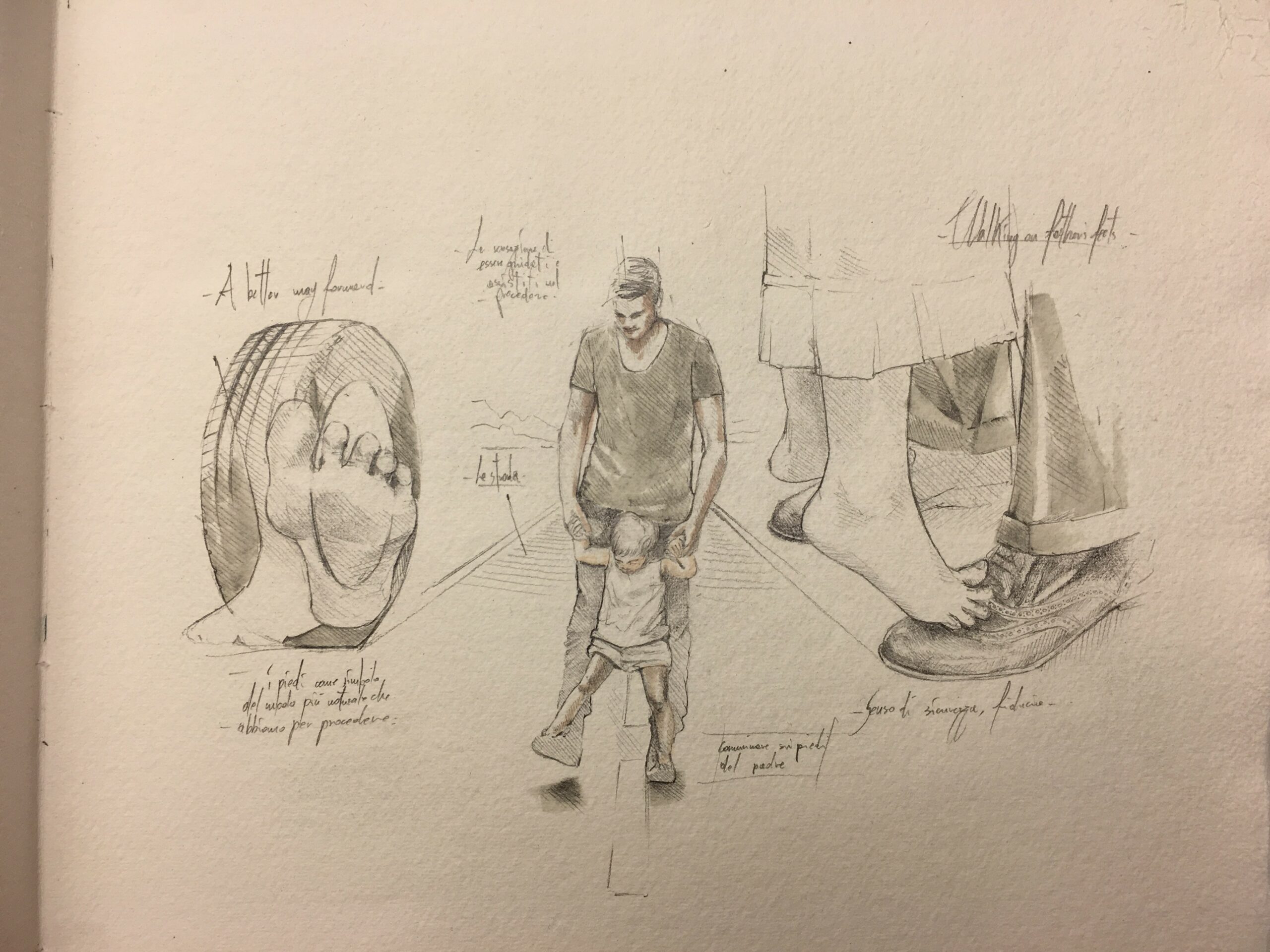
"L'Uomo in Movimento" — as the press named it — is a 24-meter mural painted on a building facade at Porta Romana, Milan, commissioned by Michelin. The image is a father and a small child on a road: the child stands on the father's feet — the gesture every parent knows — held by both hands, held up off the ground, carried forward in the most literal sense. The road stretches behind them into the distance, the perspective drawing them forward. The sky transitions from sunset — warm orange and yellow at the horizon, mountains darkening against it — upward into the deep blue of night and the first stars of a starfield. The child is young enough to need to be carried; the father is young enough to carry him. The scene is domestic and monumental at the same time: a private gesture at building scale. The concept, developed across an intensive design process, draws on the double meaning of Michelin's territory. A tire is the point of contact between vehicle and road — the interface between what we make and where we go. In Neve's reading, that interface becomes the foot: the most natural thing we have to proceed, the first technology of forward motion. "A better way forward" — written in the sketchbook — is the thread that connects the tire to the father's hand, the child's weight, the road ahead. The design process is documented in a series of sketchbook studies: tire anatomy and road perspective studies; the core concept of father and child ("camminare sui piedi del padre" — walking on father's feet — as metaphor for security, trust, the continuity of care); color and face studies for both figures; and a full watercolor maquette of the final composition — the father in dark t-shirt, the child in light blue, the road centered behind them, the sky moving from sunset to night. The tire's texture was conceived as structurally integrated into the figures — the tread pattern echoing the detail of skin and fabric, the material of the work and the subject of the commission held in the same visual language.