
menu
menu
close
client
size
120 × 193 cm
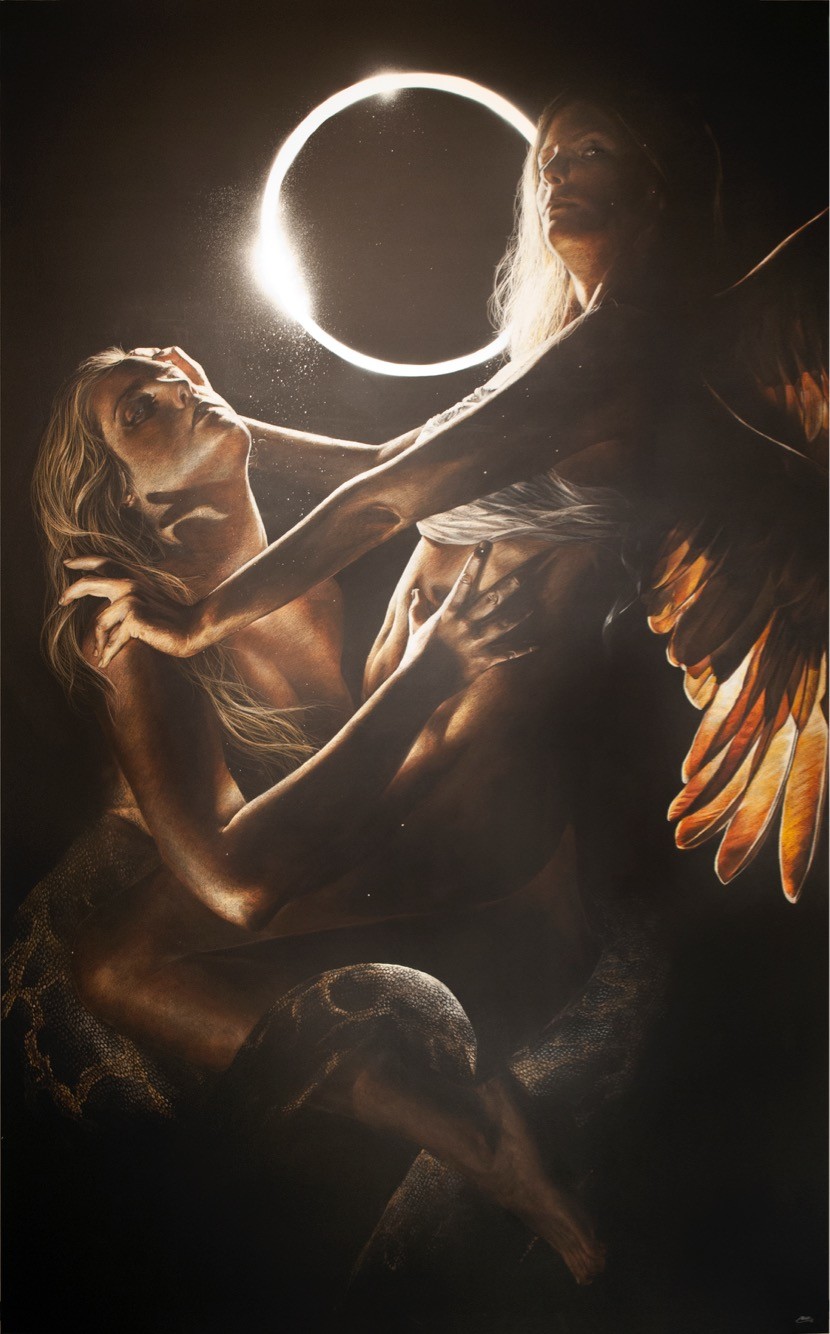
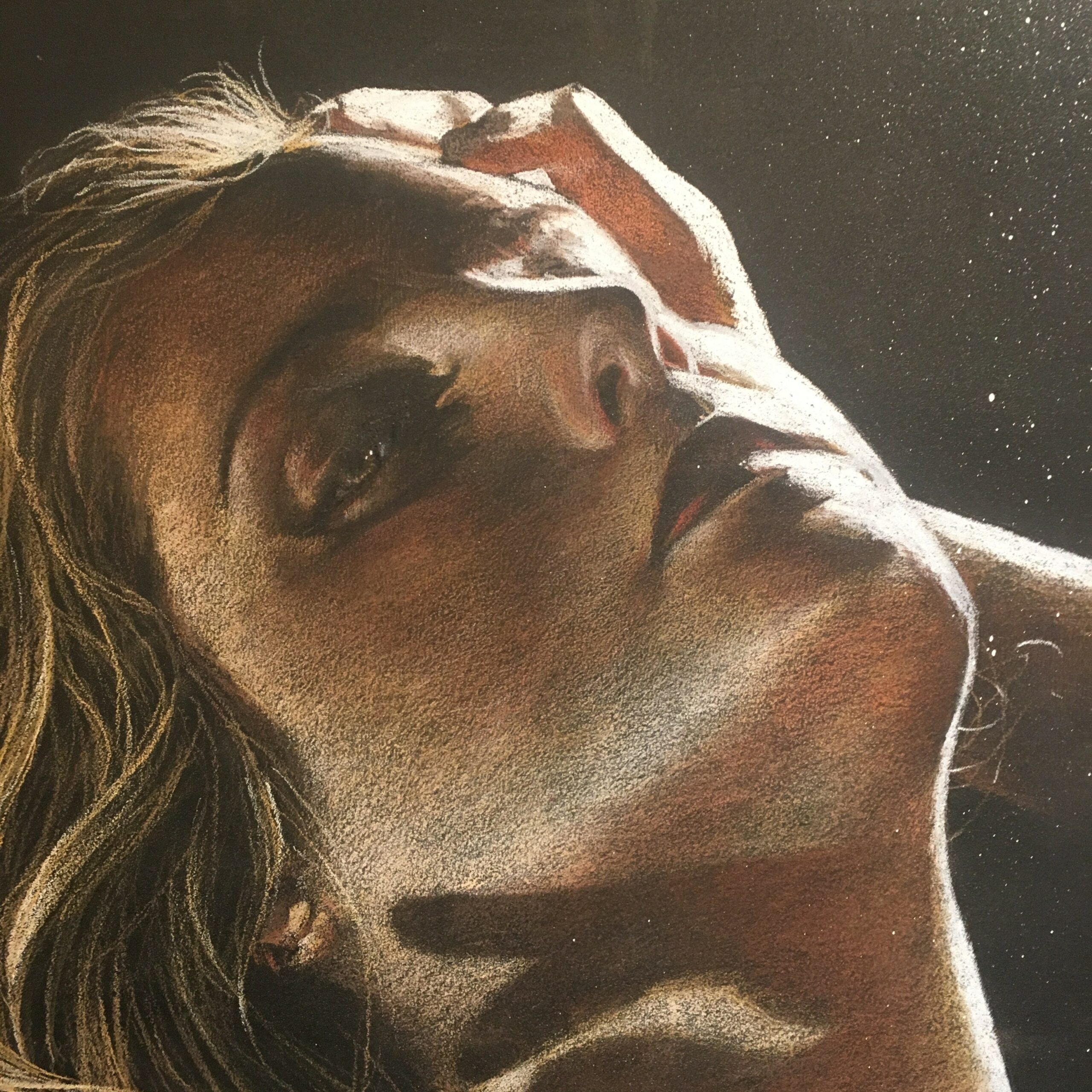
Spleen et Idéal is a studio work by artist Neve, pencils and spray on MDF, 120 × 193 cm, created in 2017 for Galerie Bartoux.
"Spleen et Idéal" is a 2017 pencils and spray on MDF made for Galerie Bartoux, 120 × 193 cm — the fourth and final work in the Bartoux series, completing the cycle that includes "Selene ed Endimione," "Pentheus," and "Fortuna e Psiche." The dimensions are proportioned to the golden ratio: 193/120 ≈ φ (1.618). The title is Baudelaire's: "Spleen et Idéal" is the first and largest section of Les Fleurs du Mal (1857) — the book's governing opposition, the one that everything else in Baudelaire's world derives from. Spleen is the earthly condition: weight, suffering, ennui, the body, time. Idéal is the aspiration that rises against it: beauty, transcendence, the unreachable. Neither defeats the other. They define each other. The composition is vertical, divided diagonally. At the lower left, a woman reclines — head thrown back, face upturned, arms rising toward the center of the image. She is the earthly figure: body warm with amber light, starfield dust scattering around her, her posture one of yearning, of reaching toward something just beyond her grasp. Coiled in the darkness below her, an enormous serpent — its scales rendered with extraordinary precision, gold and black, iridescent in the darkness — the body's weight, the earth's gravity, what keeps her below. At the upper right, a second woman — winged, standing, garbed in white, her amber-gold feathers spread into the darkness. She looks upward and beyond, past the frame, past the image itself. She is the Ideal: present, defined, but oriented toward something the image cannot contain. Between them, at the center: a solar eclipse. The corona blazes — white fire in a perfect ring, the dark circle of occlusion at its center. It is the only source of light that neither figure holds or controls. It is the threshold: the moment of alignment between the earthly and the celestial, the one instant when the two can face each other across the same axis. The eclipse does not resolve the opposition. It illuminates it. Spleen and Idéal face each other across the corona — neither absorbed into the other, neither victorious. The series ends not with a synthesis but with the figure of the opposition itself, burning. In the Bartoux cycle: Selene descends to Endymion (the divine arrives as gift); Pentheus stands against the divine's temptation and refuses (the human resists); Fortuna and Psyche fight over predestination and the construction of destiny (fate against will); Spleen and Idéal face each other across a solar eclipse (the eternal division of the soul between earth and aspiration). The series as a whole is a meditation on the encounter between the human and the overwhelming — four angles on the same unanswerable question.